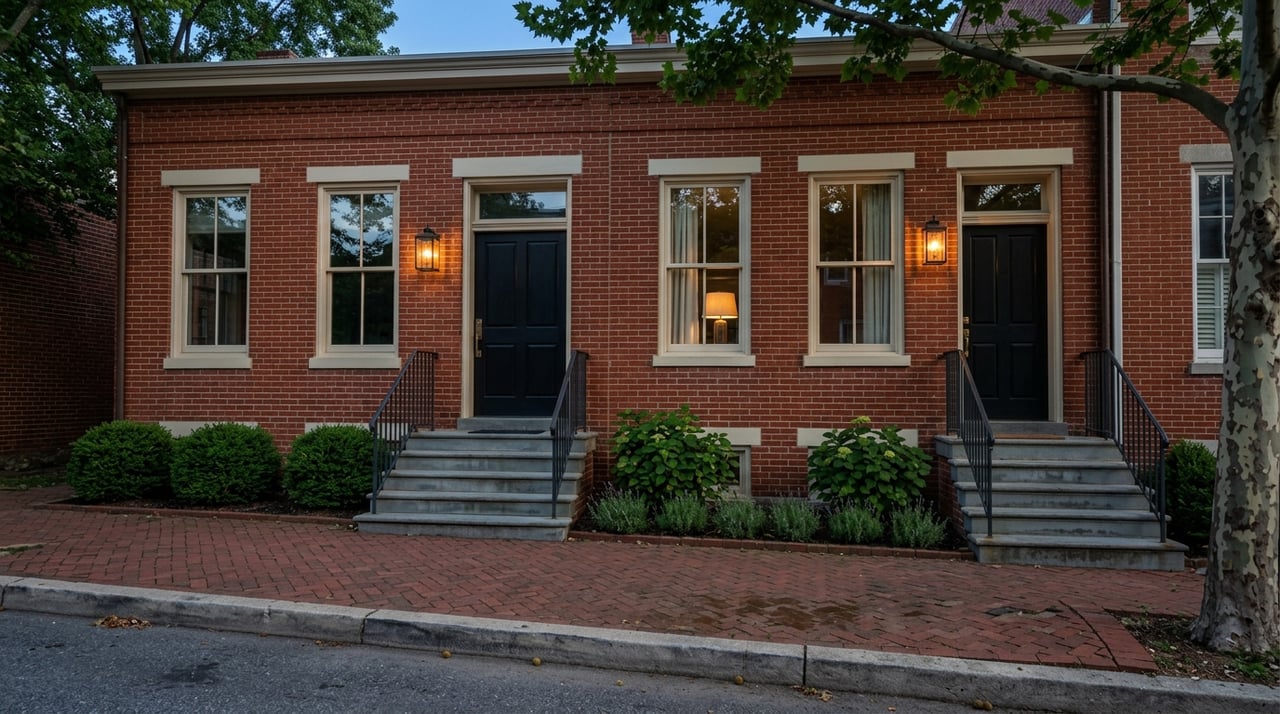
Walk the 100 block of North Royal Street on a Saturday morning and you'll find the same scene that used to belong to Market Square: canvas tents, crates of late-season tomatoes, a line at the bread stand, someone's dog waiting patiently outside the cheese table. More than 70 vendors set up here every week, rain or shine, from 7 a.m. to noon. It looks settled. It looks, in other words, like it has always been here.
It hasn't. And the gap between how permanent this spot feels and how temporary the city still calls it is the thing most residents have gotten wrong about this fall.
The Move Everyone Already Heard About
The Old Town Farmers' Market operated at Market Square without interruption for more than 270 years, a run that started when the market's earliest patrons included George Washington's own Mount Vernon produce. That streak broke, at least in terms of physical location, on January 10, 2026, when the city shifted the market to the 100 block of North Royal Street and the courtyard at Tavern Square, directly across from its historic home.
The reason was straightforward: City Hall and Market Square, a civic gathering space dating back to Alexandria's founding in 1749, needed structural repairs the city couldn't make around an active market and a functioning parking garage. Free Saturday parking for market visitors moved with it, now available at the Tavern Square Garage on Cameron Street and the Courthouse Square Garage on South Pitt Street, both open to shoppers from 6:30 a.m. to 12:30 p.m.
If you've been following along, you already know all of this. It's been public information for the better part of a year. What most people haven't clocked is what happened next.
What Changed on September 1
According to a construction update the city posted on September 1, crews are now installing a pile system to stabilize the perimeter of the underground Market Square garage, work that's expected to continue through early fall. This isn't the same phase as January's move. January relocated a market. This is the start of taking a structure apart.
The construction manager on the job is Grunley Construction Company, which solicited bids from trade subcontractors over the summer. The design team, LEO A DALY for the City Hall building itself and the local pairing of Rust Orling Architecture and LandDesign for Market Square, has been in place since 2024, with design work wrapping in early 2026 and construction running through 2028.
That's the detail worth sitting with: two full years, not two seasons. Market Square isn't getting a facelift over a long weekend. The garage is coming down, City Hall is being rebuilt around a new geothermal energy system in place of a boiler system dating to 1945, and none of it moves fast.
Here's how the timeline actually breaks down:
| Phase | Status |
|---|---|
| Design (City Hall + Market Square) | Completed early 2026 |
| Farmers' Market relocation to N. Royal St. / Tavern Square | Completed January 10, 2026 |
| City Hall closure, staff relocation | Completed January 2026 |
| Market Square garage stabilization (pile driving) | Underway, through early fall 2026 |
| Garage deconstruction | Expected this fall |
| Full project completion | End of 2028 |
Why "Temporary" Is the Wrong Word Now
A market that relocates for a few months feels like an inconvenience. A market that relocates for two to three years is a different kind of fact, and it changes how you should think about your own Saturday.
If you've been treating North Royal Street as a placeholder, waiting for things to snap back to normal, it's worth resetting that expectation. A child born this fall will be old enough for preschool before Market Square reopens in anything like its old form. The vendors you're buying from this month, the parking routine you're building, the walk you take afterward: that's not a stopgap. That's the next two years of your Saturday.
The Walk Still Works, Just From a Different Starting Point
The good news is that the rest of the neighborhood didn't freeze in place while the market moved. If anything, the walk from the new market location toward the water got better.
Lower King Street's pedestrian zone, already in place along the blocks closest to the water, was permanently extended in September 2025 to include the 200 block, closing that stretch to vehicle traffic for good. That means the stroll from North Royal Street down toward the Potomac now runs through more uninterrupted, car-free blocks than it did two years ago, which matters if you're carrying a bag of peaches in one hand and trying to keep track of a toddler with the other.
Along that walk, or just off it, sits a run of restaurants that didn't exist when the market was still at Market Square. The Commodore, a Dupont Circle import known for craft burgers and trivia nights, opened its second location at 220 North Lee Street this past March. Finn & Fire, a seafood concept from local chef Ghazal Amir of Crab Cab, opened this year at 111 North Pitt Street, close enough to the new market site that it's an easy add-on to a Saturday morning. The Majestic, the Art Deco fixture at 911 King Street, reopened in April under Chef Santiago Lopez with its longtime coconut cake still on the menu. Maman, the French café known for its pastries, took over the former Foxtrot space at 701 King Street in December 2025.
None of that changes because Market Square is a construction site. If anything, the market's temporary home sits closer to some of these newer spots than the old one did, which is a small upside buried inside an otherwise disruptive year.
What This Actually Means for the Next Two Falls
If you live in Old Town, the practical version of all this is simple. Park free at Tavern Square or Courthouse Square garages on Saturday mornings, market hours only. Expect more noise and more visible equipment near the old Market Square footprint as the garage comes down this fall, not less. Don't wait for things to go back to normal before you settle into a routine, because normal is roughly two years out. And if your Saturday used to end with a walk down King Street, that walk is actually easier now than it was before any of this started, extended pedestrian block and all.
The market didn't just move. Its old home is being taken apart from the ground up, and its new one is going to be the version most current residents remember when they think back on this stretch of Old Town. That's worth knowing, whether you're planning next Saturday or just trying to understand why the neighborhood feels a little different than it did last year.
If you're a longtime Old Town resident weighing what a property near all this change might be worth, or you're curious how construction cycles like this one tend to affect timing for buyers and sellers in the historic district, Brenda Gail Brown has spent years watching this neighborhood evolve block by block. Let's Connect.